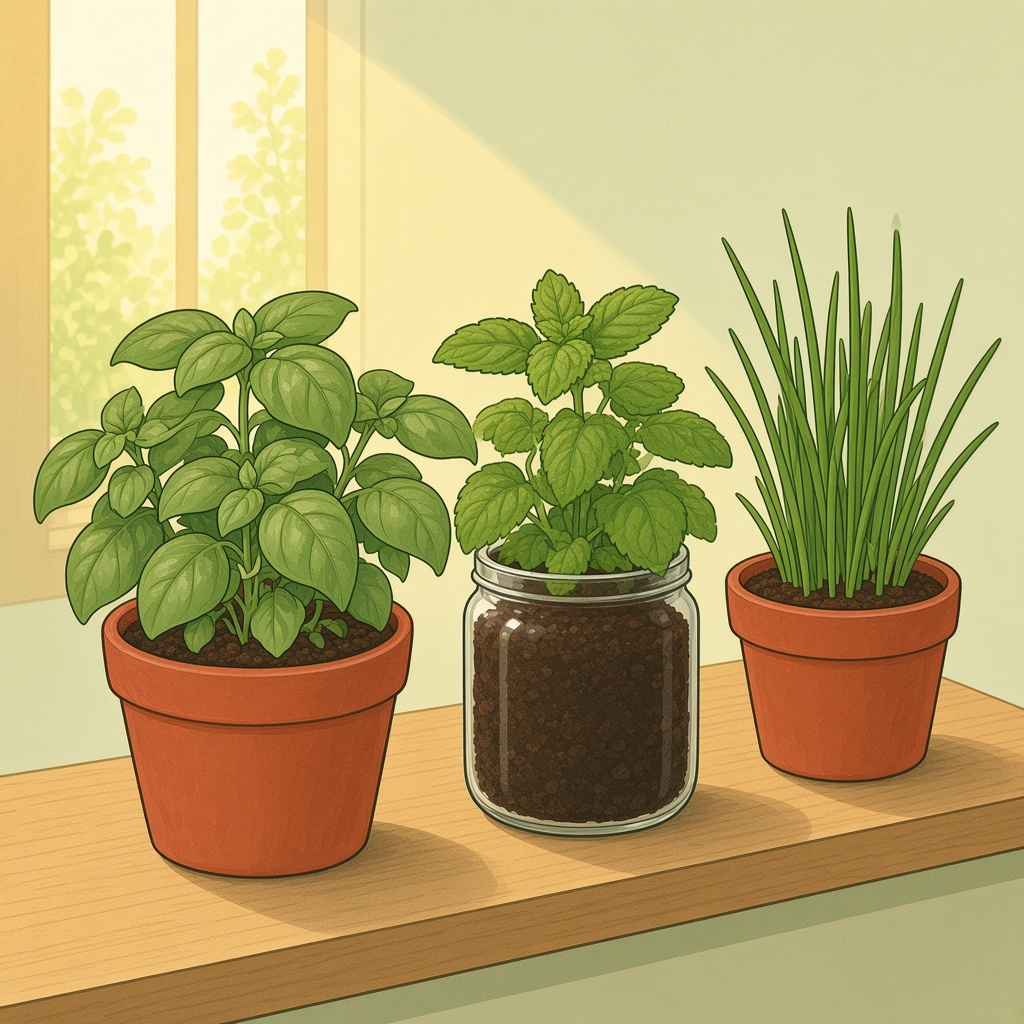
You don’t need a garden to grow soft herbs on a UK windowsill. A bright sill, a few pots, and steady watering will give you basil, mint, chives and similar leafy herbs for months. It’s cheaper than a supermarket pack, and it tastes nicer too.
This guide shows you how to grow soft herbs indoors: which ones behave well in a typical British home, how to pot on crowded shop packs, how much light and water they want, and how to harvest so the plants keep coming back. If you’ve only got a windowsill, you’re in the right place.
What counts as a soft herb
Soft herbs are the leafy ones you snip into cooking, not woody shrubs like rosemary or bay. On a sill, the reliable starters are basil, mint, chives, parsley, and coriander. They’re the ones you’re already buying in plastic, so growing them yourself pays for the compost quickly.
If your sill only gets morning light, start with chives or mint rather than basil. Basil sulks in the cold and gloom, especially from autumn through early spring.
In short
- Start with soft leafy herbs: basil, mint, chives, parsley, coriander.
- A bright sill is enough. You don’t need outdoor space.
- Match the herb to your light: mint and chives forgive shade; basil wants sun.
Shop pots or grow from seed
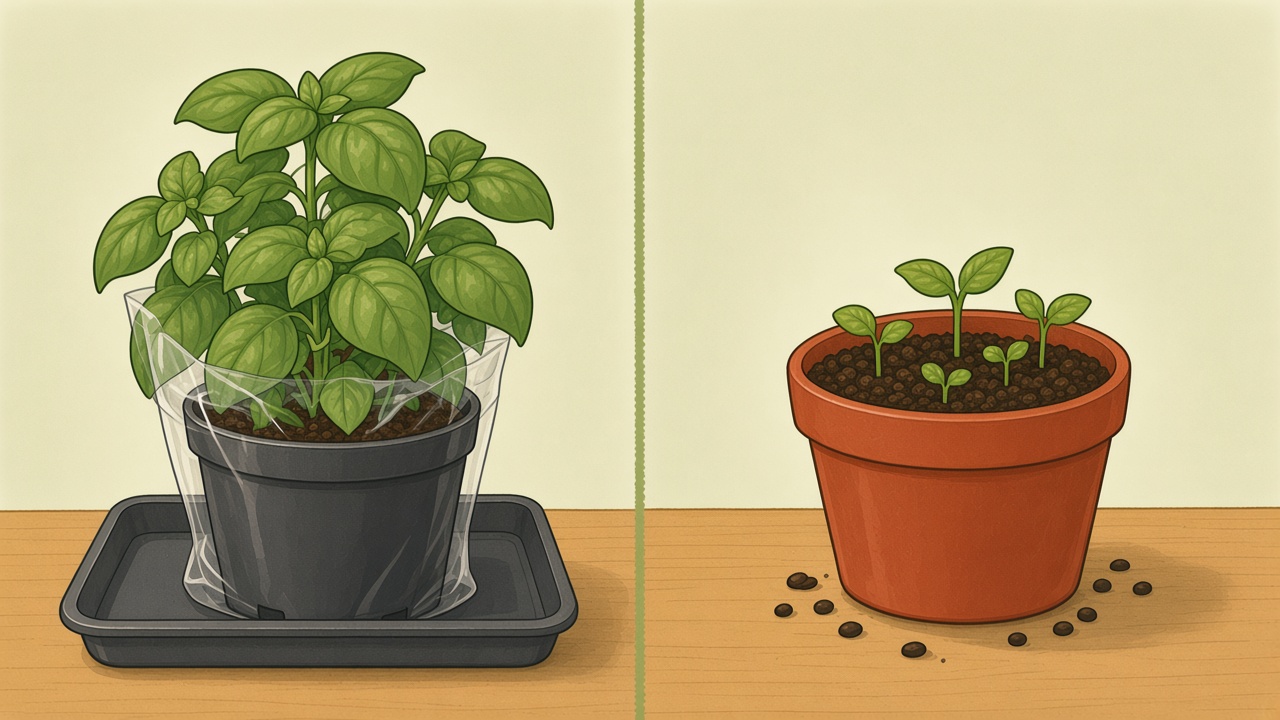
The quickest route is a supermarket or garden-centre herb pot. Those packs are grown crowded and wet, so they fade fast if you leave them in the thin plastic pot. Pot them on within a week and they’ll usually rally.
Growing from seed is slower and cheaper if you want lots of plants, and it’s a good winter project under a bright window or a cheap grow light. Check the UK sowing calendar for which months suit each herb indoors. For a first sill, potting on shop herbs teaches you watering and light without waiting three weeks for germination.
Either way, give each plant its own pot once it’s settled. Crowded roots dry out unevenly, and mint will bully whatever shares its compost.
Pots, compost and a sensible setup
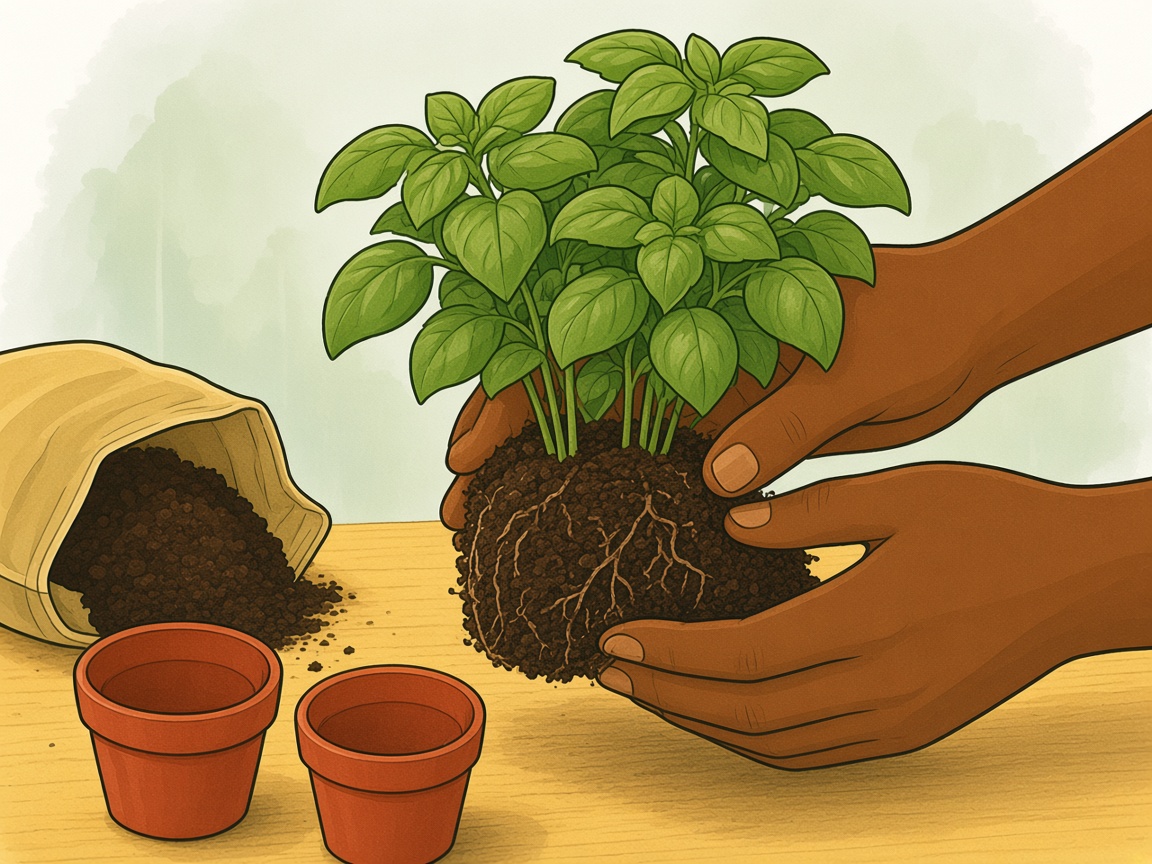
Use pots with drainage holes. A saucer underneath keeps the sill dry. Roughly 12 cm across is a good first size for one basil or parsley plant; mint prefers something a bit wider because it spreads.
Fill with peat-free multipurpose compost. You don’t need specialist herb mix for a windowsill start. Leave a centimetre at the top so watering doesn’t spill over the rim.
If you’re splitting a supermarket clump, tease it into two or three smaller plants, trim any mushy roots, and plant at the same depth as before. Water once to settle the compost, then leave it until the top feels dry.
Recap: setup
- Drainage holes and a saucer are non-negotiable.
- Peat-free multipurpose compost is fine.
- Pot shop herbs on within a week, and give mint its own pot.
Light, warmth and where to put them
Most soft herbs want a bright sill. South or west-facing is ideal in the UK. East-facing morning light still works for chives, mint and parsley. North-facing sills are hard for basil; you’ll get leggy, pale growth.
Keep leaves off cold glass in winter. A small gap, or moving pots back overnight when it’s freezing outside, stops chill damage. Away from radiators is kinder too. Hot dry air crisps basil at the edges.
Turn the pots every few days so stems don’t lean hard toward the window. It’s a small habit that keeps plants bushier.
Watering without drowning them
Water when the top couple of centimetres of compost feel dry, not on a fixed daily schedule. Lift the pot if you’re unsure: light means dry, heavy means wait.
Water until a little runs into the saucer, then empty the saucer after ten minutes. Standing water around the roots is the usual reason supermarket herbs collapse indoors.
In winter you’ll water less. In a warm kitchen in summer you might water every couple of days. The plant and the pot weight tell you more than a calendar.
Herb by herb
Use this quick comparison, then read the short note for each plant. “Best for” is about kitchen use and temperament, not a hard rule.
| Herb | Best for | Light | Fuss level |
|---|---|---|---|
| Basil | Summer cooking, tomato dishes | Bright / sunny | Medium |
| Mint | Tea, salads, beginners | Bright to part shade | Low |
| Chives | Everyday savoury finish | Bright, cooler OK | Low |
| Parsley | Steady kitchen picking | Bright | Low to medium |
| Coriander | Fresh leaves, succession sowing | Bright, cooler | Higher |
Basil
Best for: summer cooking, pasta, salads, anything with tomatoes.
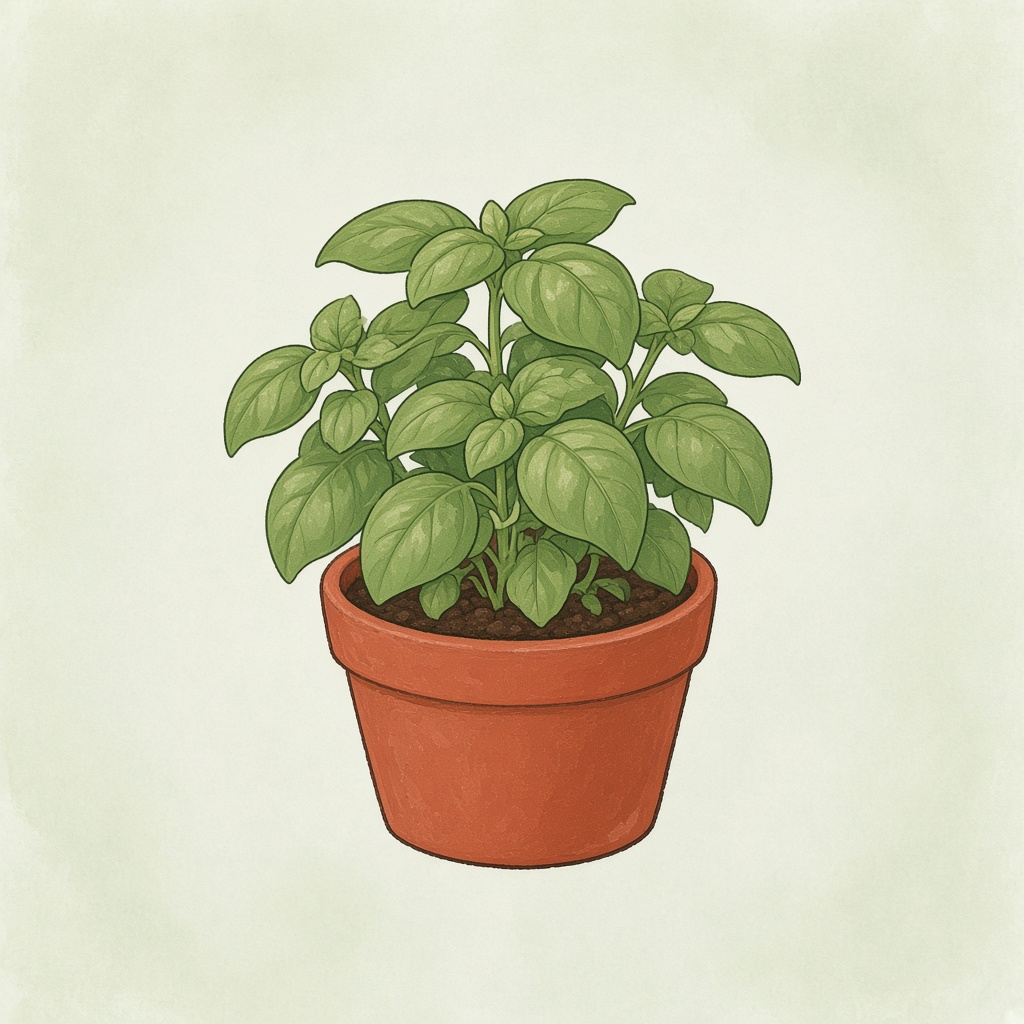
Basil wants warmth and bright light. It’s happiest from late spring through summer on a sunny sill. Pinch out the growing tips once the plant has a few pairs of leaves, so it branches instead of racing up to flower. If flower buds appear, pinch them off unless you want seeds. Yellow lower leaves usually mean too much water or not enough light.
Full guide: How to grow basil in the UK.
Mint
Best for: beginners, cooler sills, tea, and salads.
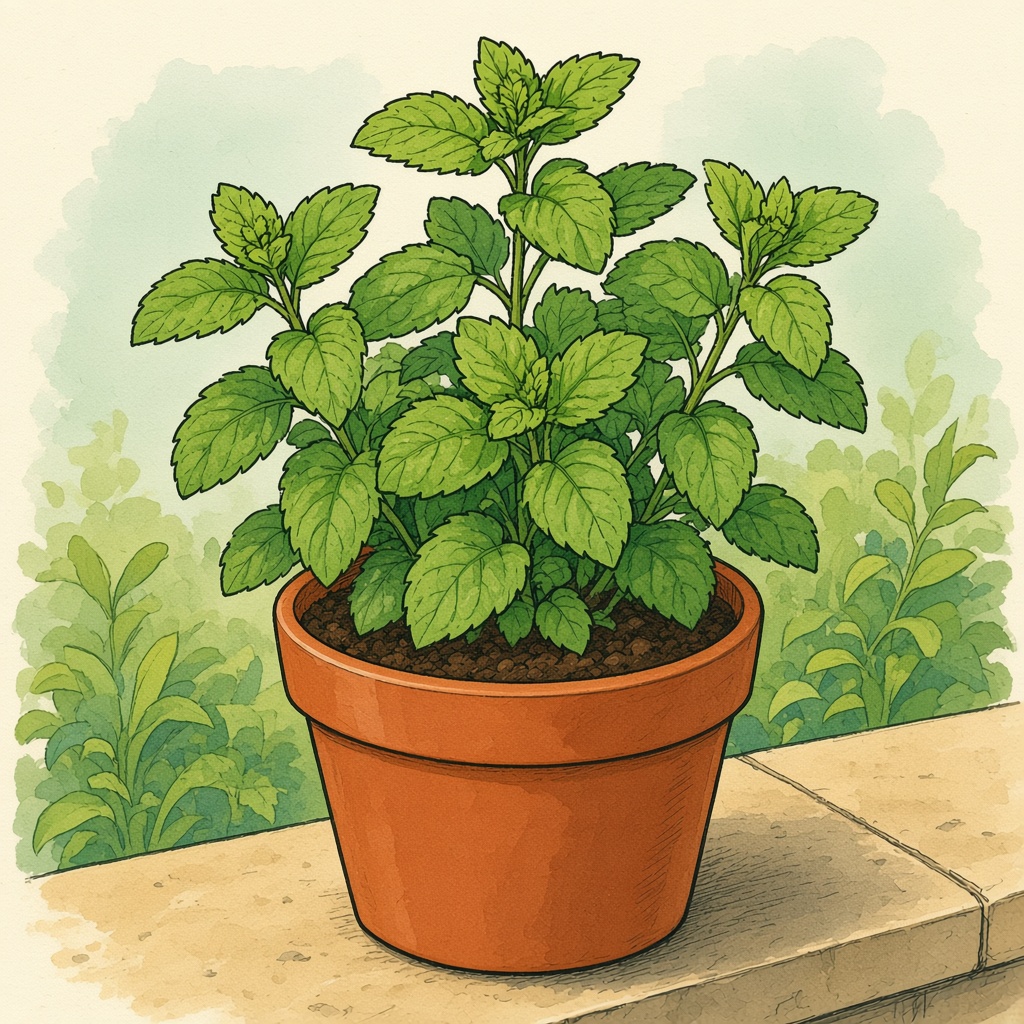
Mint is the forgiving one. It handles cooler rooms and less sun than basil. It also spreads, so keep it solo in its pot. Cut stems often. Regular picking keeps the flavour mild and the plant compact. If it gets woody, cut it back hard and let fresh shoots come through.
Full guide: How to grow mint in the UK.
Chives
Best for: everyday savoury finishing, eggs alternatives, potatoes, and soups.
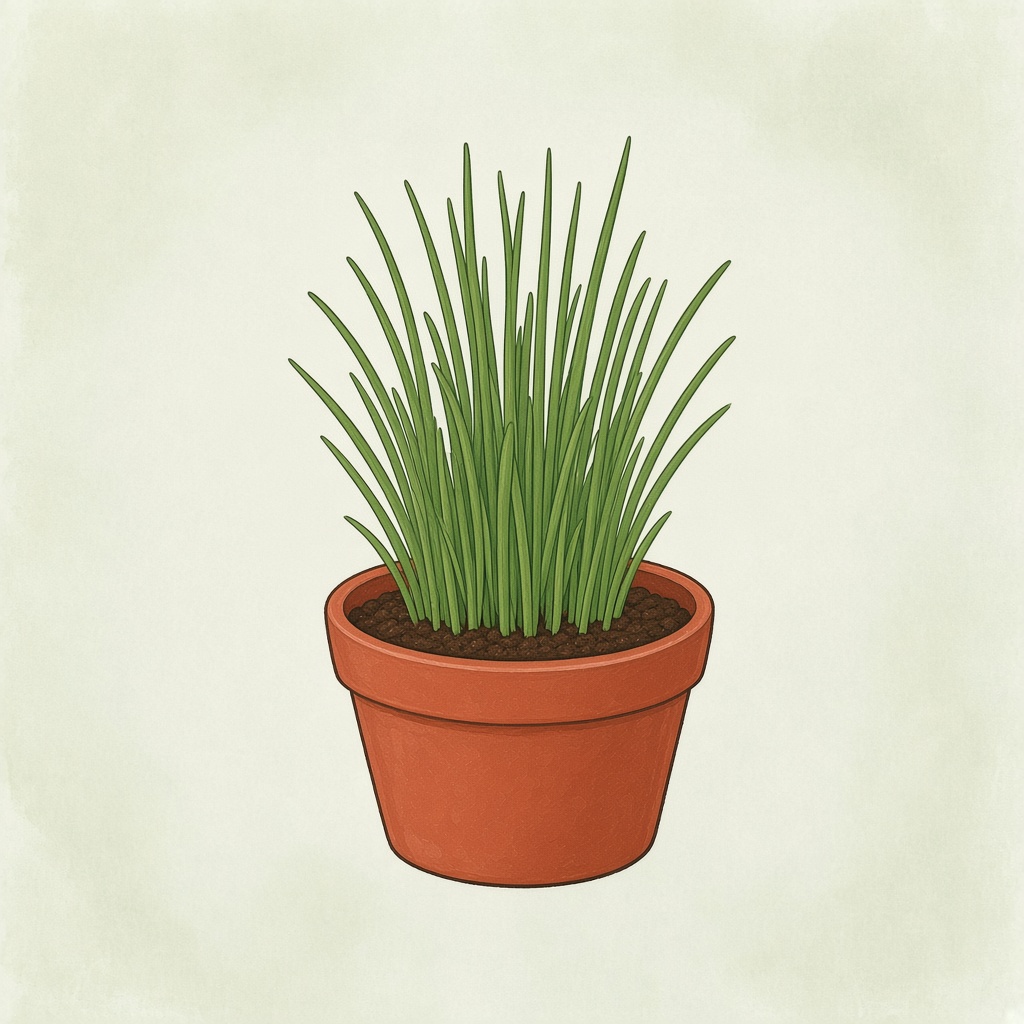
Chives are sturdy and good for beginners. They like bright light but tolerate a cooler sill. Snip leaves from the outside of the clump, leaving the centres to grow. A winter rest with less water is normal; growth picks up again as days lengthen.
Full guide: How to grow chives in the UK.
Parsley
Best for: steady picking through the week, sauces, and finishing bowls.
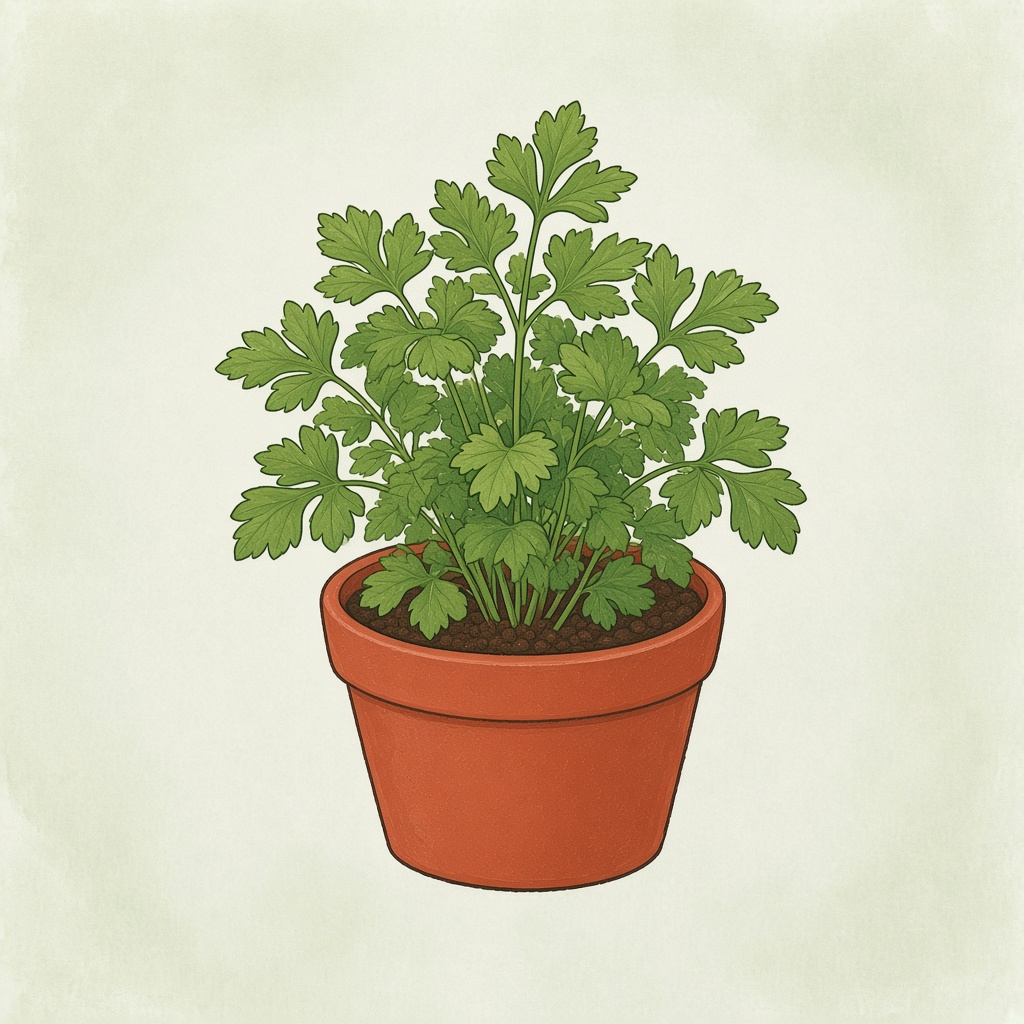
Parsley is slower at first, then steady. Flat-leaf is easier for cooking and usually happier indoors than very curly types. Keep the compost evenly moist without waterlogging. Harvest outer stems so the middle keeps producing.
Full guide: How to grow parsley in the UK.
Coriander
Best for: fresh leaves in curries and salads, if you’ll sow little and often.
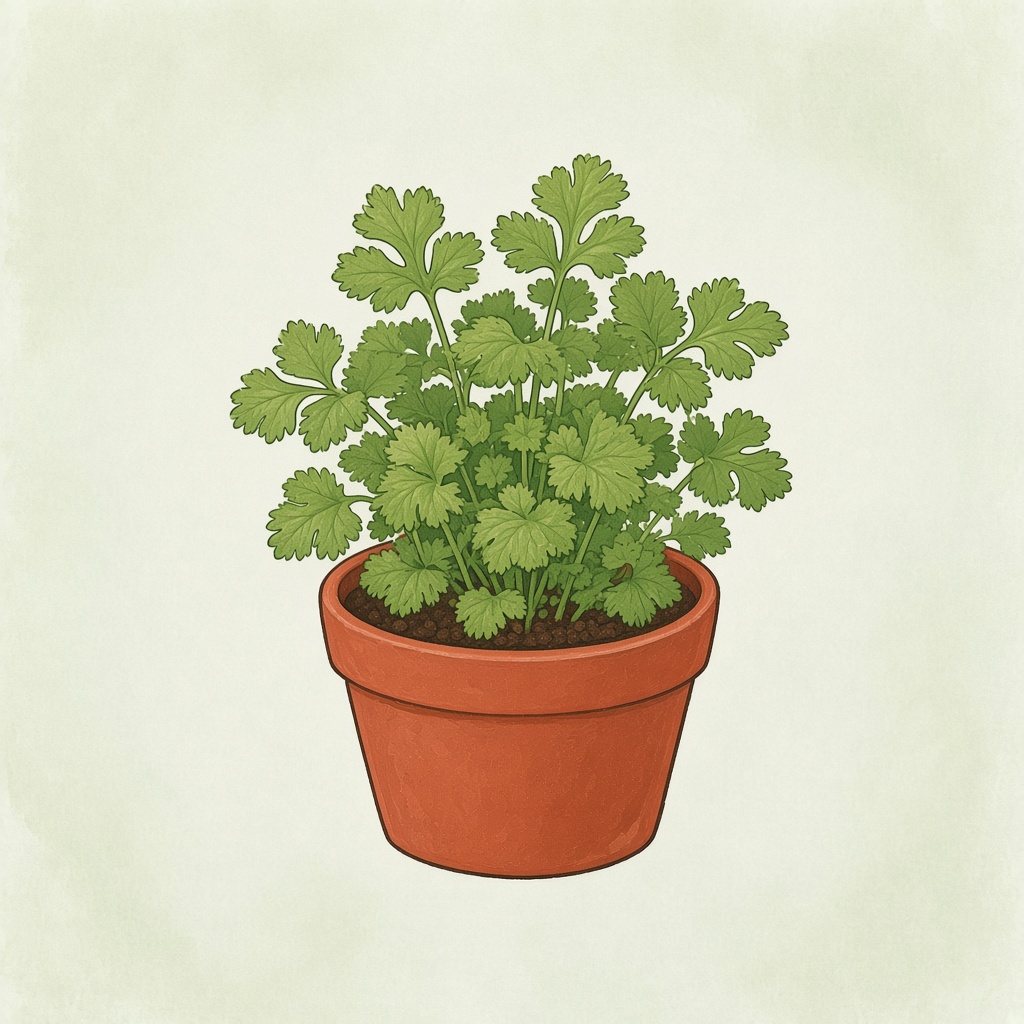
Coriander bolts (runs to flower) if it’s hot, dry, or suddenly stressed. On a sill, sow a few seeds every couple of weeks rather than relying on one plant forever. Keep it cooler than basil if you can, and harvest young leaves often. If it flowers, you can still use the green seeds as they form.
Full guide: How to grow coriander in the UK.
Key points
- Basil: warm, sunny, pinch tips.
- Mint: tough, own pot, cut often.
- Chives: beginner-friendly, snip outer leaves.
- Parsley: steady moisture, take outer stems.
- Coriander: sow little and often; avoid heat stress.
How to harvest so they keep growing
Never strip a plant bare. As a rule of thumb, take no more than a third of the leafy growth at once. Cut just above a leaf pair so two new shoots can form.
Use clean scissors or pinch with your fingers. Wash herbs just before you cook with them, not days ahead, if you want them to stay perky in the fridge.
If you’ve only got a small plant, pick a little often for finishing dishes rather than waiting for a huge harvest. Soft herbs are at their best used fresh.
Common problems and fixes
Wilting with wet compost usually means root stress from overwatering. Let it dry a little, check drainage, and trim any rotten roots if you repot.
Leggy pale stems mean not enough light. Move to a brighter sill, or accept that winter basil may not be worth fighting and switch to chives and mint until spring.
Whitefly or aphids sometimes appear indoors. A rinse under the tap and better airflow helps. Isolate a badly affected pot from the others while you sort it.
If a shop basil never recovers after potting on, don’t take it personally. Those packs are sometimes already exhausted. Compost what’s left and start again with a fresher plant or a tray of seed.
In short: common fixes
- Wet and wilted: ease off watering and check drainage.
- Leggy and pale: more light, or switch to mint and chives in winter.
- Pests: rinse, improve airflow, isolate the pot.
- Shop pack that never rallies: start again; it may already have been spent.
A simple starter set for this weekend
If you’re setting up one sill in about twenty minutes, do this: buy one basil, one mint, and one chives (or start chives from seed if you prefer). Split the basil if the rootball is a solid mat, pot each plant into its own drained pot with peat-free compost, water once, and stand them on your brightest sill with a saucer under each.
That mix covers different light needs and gives you something to pick while you learn the watering rhythm. Once those are happy, add parsley. Leave coriander until you’re comfortable, because it’s the fussiest of the soft herbs on a warm kitchen sill.
Frequently asked questions
Why do supermarket herbs die so quickly?
They’re grown crowded and wet for the shelf, not for a long life on your sill. Pot them on within a week, give them drainage, and water only when the top of the compost feels dry. Even then, some packs are already exhausted when you buy them.
Can you grow basil on a north-facing windowsill?
It’s a struggle in most UK homes. You’ll often get pale, leggy growth. Use that sill for mint and chives, and keep basil for a brighter south or west window, or wait for longer spring days.
Is it better to grow herbs from seed or from shop pots?
Shop pots are faster for a first sill. Seed is cheaper if you want lots of plants or you’re replacing coriander often. Many people do both: pot on supermarket basil and mint now, sow coriander and extra basil later.
How often should I water windowsill herbs?
There’s no fixed schedule. Water when the top couple of centimetres feel dry, then empty the saucer after watering. In winter you’ll water less; in a warm summer kitchen you may water every couple of days.
Which soft herbs are best for beginners?
Mint and chives are the most forgiving. Basil is worth it if you’ve got a sunny sill in the warmer months. Parsley is steady once it settles. Coriander asks for more attention because it bolts in heat.
Where next
When your sill is producing, use what you pick. A handful of basil or chives changes a tray of roast veg or a bowl of lentils more than you’d expect from such a small grow.
When you want a plate for those herbs, try our tomato-herb pasta, or put coriander and chilli to work in the mushroom, pepper and tofu coconut curry. For deeper plant-by-plant advice, browse the crop grow guides, or see what to sow this month on the UK sowing calendar. More in Grow and Recipes. For now, get three pots on the brightest sill you’ve got and pot on anything still sitting in supermarket plastic.
Leave a Reply